
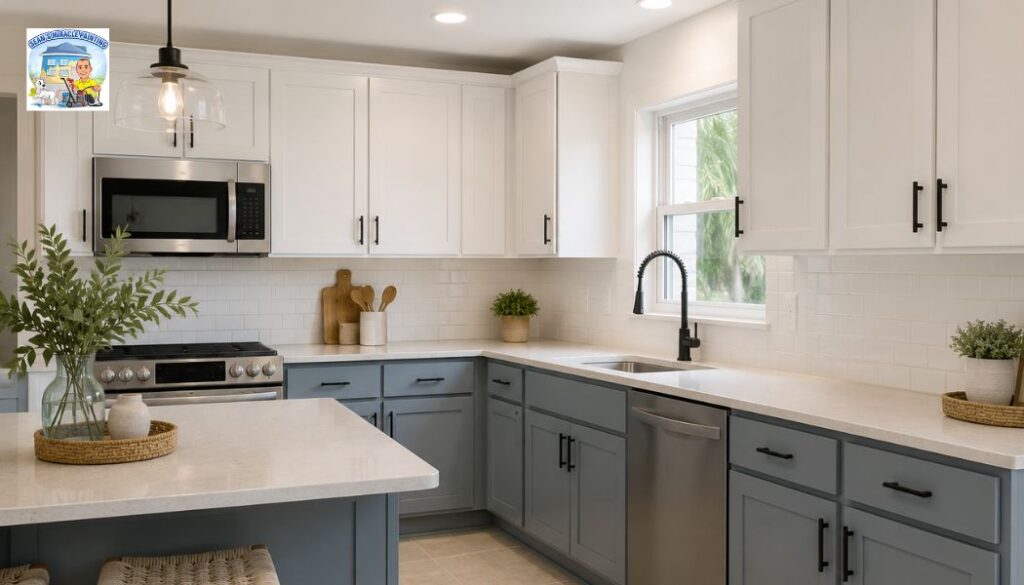
Replacing kitchen cabinets can cost tens of thousands of dollars. Professional cabinet painting costs a fraction of that, and when it’s done right, most people can’t tell the cabinets weren’t replaced at all. If your cabinets are structurally sound but visually outdated, cabinet painting might be the smartest upgrade you can make to your Englewood, FL home this year.
Why Cabinet Painting Is Worth Considering
Kitchens sell homes and define how a house feels day to day. But full cabinet replacement is expensive, disruptive, and often unnecessary if the boxes and doors are still in good shape. Cabinet painting gives you:
- A completely new look at a fraction of replacement cost
- A faster timeline than a full renovation
- The ability to change wood tone, color, or style completely
- Less waste, since you’re refinishing instead of tearing out
For homeowners who love their kitchen layout but hate the color or finish, painting solves the problem without the cost or mess of a full remodel.
What Separates a Professional Cabinet Paint Job from a DIY Job
Cabinet painting looks simple until you actually try it. The difference between a finish that looks factory-smooth and one that looks homemade comes down to process, not effort. Here’s what typically separates the two:
Spray application vs. brush and roller. Spraying eliminates brush marks entirely and produces a smoothness that a brush or roller physically can’t achieve.
Degreasing vs. a quick wipe-down. Kitchen cabinets accumulate cooking oil and residue over years. A proper degreaser cuts through it; a quick wipe just moves it around.
Sanding between coats vs. painting over a glossy surface. Cabinets have a factory finish that paint won’t bond to unless it’s sanded first. Skip this step, and the new paint peels within a year.
Bonding primer vs. standard wall primer. Cabinet surfaces need a primer formulated specifically for the material, especially for dramatic color changes like dark wood to white.
Catalyzed topcoat vs. standard paint. A catalyzed finish cures harder than regular paint, which matters in a kitchen environment full of humidity, cleaning chemicals, and daily hand contact.
The Cabinet Painting Process, Step by Step
A properly done cabinet painting project generally looks like this:
- Removal – Doors, drawer fronts, and hardware are removed and labeled so everything goes back exactly where it belongs.
- Degreasing – Every surface is cleaned to remove years of cooking oil and buildup.
- Sanding – The existing finish is broken so the new primer and paint can properly bond.
- Priming – A bonding, stain-blocking primer is applied, especially important for major color changes.
- Spraying – Doors and drawer fronts are sprayed flat in a controlled environment for a smooth, even coat.
- Topcoat and cure – A catalyzed topcoat is applied for a hard, durable, cleanable finish.
- Reassembly – Everything is reinstalled, cleaned, and left ready to use.
How Long Painted Cabinets Actually Last
With proper prep and a quality catalyzed topcoat, professionally painted cabinets typically last 8 to 15 years before they need to be refinished again. That durability depends almost entirely on whether the prep steps above were actually followed. This is why cabinet painting quotes can vary so much between contractors: a cheaper quote often means shortcuts on prep, which shows up as peeling or chipping within a year or two.
Design Trends: Two-Tone Cabinets and Color Changes
Two-tone cabinet painting, where upper and lower cabinets are painted in contrasting colors, has become increasingly popular in Englewood kitchens. It’s a way to add character without a full renovation. Dramatic color changes, like dark wood to white or a soft neutral, are also common and fully achievable with the right stain-blocking primer to prevent bleed-through.
Why Englewood Homeowners Choose Sean’s Miracle Painting
Sean’s Miracle Painting uses a full spray process on every cabinet job, the same principle factory finishes are built on. Every door and drawer front is removed, degreased, sanded, primed with a cabinet-specific bonding primer, and topcoated with a catalyzed finish built to handle Englewood kitchens’ humidity and daily wear.
Jobs are quoted by door and drawer count with every phase broken out, so homeowners know exactly what’s included before a single hinge comes off. Sean’s Miracle Painting is fully licensed and insured for in-home work, keeps job sites clean and organized throughout multi-day projects, and typically has kitchens fully reassembled and ready to use within a week.
The most common reaction after a completed project is that guests assume the homeowner bought new cabinets. That’s the standard the team works to on every job.
Conclusion
Cabinet painting is one of the highest-impact, lowest-cost upgrades available to Englewood homeowners who want a new kitchen look without a new kitchen price tag. The result depends entirely on process: degreasing, sanding, the right primer, and a sprayed catalyzed topcoat are what separate a finish that lasts a decade from one that peels within a year.
If your Englewood kitchen is ready for a refresh, Sean’s Miracle Painting offers free estimates and a full spray-finish process built to last. Schedule your free cabinet painting estimate today.
Frequently Asked Questions
How much does cabinet painting cost compared to new cabinets?
Cabinet painting typically costs a fraction of full cabinet replacement, since you’re keeping the existing boxes and doors and refinishing them rather than buying and installing new units.
How long will professionally painted cabinets last?
With proper prep and a quality catalyzed topcoat, professionally painted cabinets generally last 8 to 15 years before refinishing is needed again.
Can dark wood cabinets be painted white?
Yes. A stain-blocking, bonding primer designed for cabinetry is what makes dramatic changes like dark wood to white possible without bleed-through or adhesion problems later.
Do cabinets get painted in place or removed first?
Doors and drawer fronts are typically removed and painted flat in a controlled spray environment, which produces a smoother, more even finish than painting them while still mounted on the wall.
Do I need to empty my cabinets before the project starts?
Interior contents should generally be removed if the interior of the boxes is being painted. For exterior-only cabinet painting, contents can usually stay inside during the process.